Can I Change Health Insurance Plans?
Can You Change Health Insurance Plans at Any Time?
Key Takeaway: Changing from one health plan to another is restricted to annual open enrollment and Special Enrollment Periods triggered by qualifying life events. You cannot move from a bronze to a gold marketplace plan, swap an employer HMO for a PPO, or pick a different Medicare Advantage option mid-year without a permitted enrollment window.
The question “can I change health insurance plans?” usually means comparing specific options, not just whether coverage exists, but which plan design fits your doctors, prescriptions, and budget. Patients ask this after reviewing employer benefits packets, browsing metal tiers on Healthcare.gov, or receiving a Medicare Annual Notice of Change letter listing different Advantage plan options for the coming year.
Plan changes follow the same enrollment rules as broader coverage switches. Marketplace enrollees change plans during November 1 through January 15 open enrollment or a 60-day Special Enrollment Period. Employer plans allow changes during company open enrollment or within 30 days of qualifying events. Medicare Advantage and Part D plan changes happen during Annual Enrollment (October 15 – December 7) or Medicare SEPs.
For step-by-step guidance on timing your personal enrollment change, see our companion article on whether you can change your insurance plan.
Changing Plans Within the Same Carrier vs. Switching Carriers
Key Takeaway: You can change plan tiers, HMO to PPO, bronze to gold, HDHP to traditional PPO, within the same insurer during permitted enrollment windows. Switching carriers changes your member ID, provider contracts, and often your pharmacy benefit manager. Both types of changes reset your deductible.
Staying with the same carrier but selecting a different plan option is common during employer open enrollment. Your company may offer three Blue Cross plans, an HMO, a PPO, and a high-deductible plan with an HSA, all from the same issuer. Changing from the HMO to the PPO updates your network access and copayment structure but may keep the same member portal and customer service line.
Switching carriers is a bigger change. On Healthcare.gov, moving from a Cigna silver plan to a Kaiser gold plan means a new insurer, new provider contracts, and potentially a new pharmacy benefit routed through Express Scripts instead of OptumRx or Caremark. Your old member ID and group number no longer apply. Claims in process on your former plan still settle under the old policy number.
Whether you change tiers within one carrier or move to a different issuer, compare the full plan design, not just the monthly premium difference between options.
Enrollment Windows for Changing Plans by Coverage Type
Key Takeaway: Marketplace plans change through Healthcare.gov during open enrollment or a 60-day SEP. Employer plans change through HR during open enrollment or a 30-day window after qualifying events. Medicare plan changes happen during AEP (October 15 – December 7) or Medicare SEPs. Medicaid enrollment is year-round in most states.
| Coverage Type | When You Can Change Plans | Portal |
|---|---|---|
| ACA marketplace | Nov 1 – Jan 15 open enrollment; 60-day SEP after QLE | Healthcare.gov |
| Employer-sponsored | Company open enrollment; 30 days after QLE | HR portal + Availity for verification |
| Medicare Advantage & Part D | Oct 15 – Dec 7 AEP; Medicare SEP events | Medicare.gov |
| Original Medicare + Medigap | Medigap guaranteed issue during Part B enrollment; limited switches after | Medicare.gov + state-licensed broker |
| Medicaid & CHIP | Year-round in most states when income qualifies | State Medicaid portal or Healthcare.gov |
Each window applies to plan-to-plan changes within the same coverage category. Moving from a marketplace bronze plan to an employer PPO requires a qualifying life event, gaining employer coverage, not just open enrollment on Healthcare.gov alone.
How to Compare Plan Options Before You Change
Key Takeaway: Compare four factors across every plan option: monthly premium, annual deductible and out-of-pocket maximum, provider network, and prescription formulary. A lower-premium plan with a narrow network and high drug tiers may cost more than a higher-premium plan if you see specialists regularly.
Use the right comparison tool for your coverage type:
- Marketplace: Healthcare.gov plan comparison tool, shows premiums, deductibles, metal tiers, estimated total costs, and whether your doctors appear in each plan's network.
- Employer: Your company benefits portal, compare HMO, PPO, EPO, and HDHP options side by side with employer contribution amounts factored in.
- Medicare: Medicare.gov Plan Finder, star ratings, Part D formulary coverage, copays, and provider network status for each Advantage plan option in your ZIP code.
Verify network status directly with your doctors and hospitals, provider directories on insurer sites are often outdated. For pharmacy benefits, check whether each plan routes prescriptions through Express Scripts, OptumRx, or Caremark and confirm tier placement for every ongoing medication. A plan that covers your cardiologist but places your statin at a non-preferred tier may cost more annually than a plan with a slightly higher premium and better drug coverage.
When comparing employer HDHP options against traditional PPO plans, factor in employer HSA contributions. A $1,200 employer HSA deposit can offset a higher deductible and change which plan is actually cheaper for your household.
What Changes When You Move to a Different Plan Tier
Key Takeaway: Deductibles, out-of-pocket maximums, copayments, network rules, and pharmacy formularies all change when you select a different plan, even within the same carrier. Prior authorizations approved under your old plan do not transfer. Your deductible resets to zero on the new plan's effective date.
Moving from an employer PPO to an HDHP typically means lower premiums, a higher deductible, and HSA eligibility. Moving from a marketplace bronze plan to a gold plan means higher premiums but lower deductibles and copays for office visits and prescriptions. Each shift changes your expected out-of-pocket costs across the plan year.
Out-of-pocket maximums reset with every plan change. If you met $4,000 of a $6,000 maximum on your current plan and switch in August, you start at $0 on the new plan's out-of-pocket counter. Prescription drug tiers may change, a medication covered at Tier 2 on Express Scripts under your current employer plan may sit at Tier 4 on Caremark under a different plan option you are considering.
Prior authorizations, step-therapy approvals, and formulary exceptions approved on your current plan expire when that plan ends. Your prescriber must submit new prior authorization requests to the new plan's PBM after your coverage starts. Budget two to four weeks for re-approval before your first refill on the new plan.
Changing Marketplace Metal Tiers and Issuer Options
Key Takeaway: Healthcare.gov lets you move between bronze, silver, gold, and platinum plans during open enrollment or a 60-day SEP. Silver plans with cost-sharing reductions may offer lower deductibles than gold for subsidy-eligible enrollees. Compare total estimated annual cost, not just monthly premium.
Metal tiers reflect actuarial value, the percentage of expected healthcare costs the plan covers, not the quality of doctors or hospitals in the network. Bronze plans cover roughly 60% of costs with lower premiums and higher deductibles. Gold plans cover roughly 80% with higher premiums and lower point-of-care costs.
Many enrollees change from bronze to silver after a year of high out-of-pocket spending, or from silver to gold when they anticipate more specialist visits or prescriptions. If your income qualifies for cost-sharing reductions, a silver plan may offer gold-level deductibles at silver-level premiums, making it worth comparing silver CSR plans against gold plans on Healthcare.gov before you enroll.
You can also change issuers entirely, moving from one insurance company's silver plan to a competitor's gold plan. Each issuer contracts with different provider networks and pharmacy benefit managers. Run your doctor list and medication list through every plan you are considering, not just the one with the lowest advertised premium.
Denied Claims and Changing Health Insurance Plans
Key Takeaway: A denied claim is not a qualifying life event for mid-year plan changes. File an appeal on your current plan first. Appeals with complete documentation succeed roughly 40–55% of the time. Changing plans does not retroactively cover denied services from your old plan.
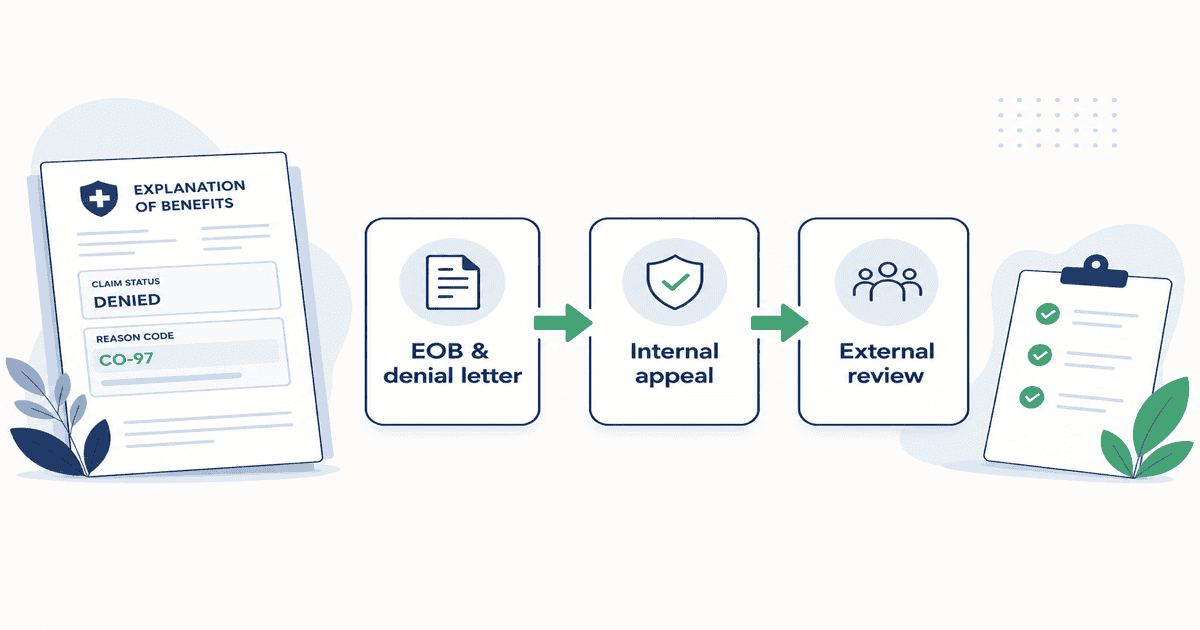
If your insurer denied a prior authorization or a medical claim, selecting a different plan option during the next open enrollment will not reverse that denial. Pursue the internal appeal on your current plan, include member ID, policy number, denial reason code, and a physician letter of medical necessity submitted through Availity or your insurer's member portal.
Compare alternative plan options for the next enrollment period while your appeal runs. A plan with broader prior authorization policies or a more favorable formulary may prevent future denials, but it cannot fix claims already processed under your old plan. External review after internal denial overturns an additional 30–40% of well-documented cases with an independent reviewer not employed by your insurer.
Wrong vs. Correct Ways to Change Health Insurance Plans
Key Takeaway: Successful plan changes coordinate enrollment windows, documentation, and effective dates. Failed attempts rely on plan dissatisfaction without a qualifying life event, ignore formulary differences, or create coverage gaps between old and new plans.
| ❌ Wrong Approach | ✅ Correct Approach |
|---|---|
| Switching from a marketplace silver plan to a gold plan in July because copays feel high, with no qualifying life event reported on Healthcare.gov. | Comparing silver CSR, gold, and platinum options during November open enrollment on Healthcare.gov, enrolling by December 15 for January 1 effective date, after verifying provider networks and OptumRx formulary tiers for every prescription. |
| Choosing the employer HDHP over the PPO based only on the lowest paycheck deduction, without calculating expected specialist visits and drug costs against the higher deductible. | Running both plan options through your employer benefits calculator with expected care usage, factoring in employer HSA contributions, deductible reset, and Caremark tier costs for ongoing medications. |
| Changing from one Medicare Advantage plan to another in March because a claim was denied, without filing an appeal on the current plan first. | Filing a formal appeal on the current Advantage plan with denial code and physician documentation, then comparing alternative Advantage and Part D options on Medicare.gov during October Annual Enrollment if the appeal fails. |
| Cancelling the old plan before confirming the new plan is active, creating a coverage gap during the first week of the new plan year. | Enrolling in the new plan first, confirming active status through Availity or the insurer member portal, then allowing the old plan to terminate automatically on its last day of coverage. |
Denied a Claim Before You Change Plans?
Fight the denial on your current plan first. AppealFlow drafts a formal appeal letter with member ID, policy number, and denial details, ready to submit in under 60 seconds.
Portals for Changing Health Insurance Plans
Key Takeaway: Healthcare.gov handles marketplace plan changes. Medicare.gov compares Advantage and Part D plan options. Employer HR portals process plan tier selections. Availity verifies enrollment changes propagated to your carrier. Express Scripts, OptumRx, and Caremark manage pharmacy benefits after a plan change.
| Portal | Plan Types | Plan Change Action |
|---|---|---|
| Healthcare.gov | ACA marketplace plans (bronze, silver, gold, platinum) | Compare and enroll in a new plan during open enrollment or SEP, old plan terminates when new plan starts |
| Medicare.gov | Medicare Advantage, Part D | Plan Finder during AEP (Oct 15 – Dec 7), compare star ratings, formularies, and networks across plan options |
| Availity | Employer plans (BCBS, Aetna, Humana, Cigna) | Verify HR plan change updated member profile and new plan tier before filing claims or appeals |
| Express Scripts | Employer and marketplace pharmacy benefits | Check formulary tier placement and prior authorization requirements on the new plan before first refill |
| OptumRx | UnitedHealthcare and partner plan pharmacy benefits | Compare drug coverage across plan options, tier changes affect monthly out-of-pocket drug costs |
| Caremark | CVS Health and Aetna pharmacy benefits | Confirm mail-order and retail pharmacy access under the new plan option before switching |
After any plan change, download your new insurance card and confirm your member ID, group number, and PBM assignment. HR processing does not always sync immediately with the carrier's claims system, check Availity or your insurer portal within two weeks of your effective date.
Five Mistakes When Changing Between Health Plans
Key Takeaway: Common plan-change failures: missing SEP deadlines, ignoring deductible reset, comparing premiums without networks and formularies, changing plans because of claim denials, and creating coverage gaps between plan effective dates.
- Missing the 60-day marketplace SEP or 30-day employer window. Calendar the qualifying event date immediately and submit plan change paperwork within the deadline.
- Ignoring deductible and out-of-pocket maximum reset. Mid-year plan changes restart both counters at zero, budget for higher costs until you meet the new plan's deductible.
- Comparing premiums without checking networks and drug tiers. Use full plan comparison tools on Healthcare.gov or Medicare.gov for every option you are considering.
- Changing plans because of a denied claim. Appeal first on your current plan, a new plan option does not retroactively cover denied services.
- Assuming prior authorizations transfer. Submit new prior auth requests to the new plan's PBM, Express Scripts, OptumRx, or Caremark, after your coverage starts.
Frequently Asked Questions
Direct answers about when and how you can change between health insurance plan options.
Generate Your Free Appeal Letter
AppealFlow.net drafts a formal appeal letter with fields for member ID, policy number, claim number, and denial details, edit it live, then download as PDF or Word. No account required.
- 100% Free
- No Signup
- PDF & Word Export
Disclaimer: This article is for educational purposes only and does not constitute medical or legal advice. AppealFlow.net is not a healthcare provider or law firm. Enrollment rules vary by state, employer, and plan type. Verify your eligibility for a Special Enrollment Period with Healthcare.gov, your HR department, or Medicare.gov before changing plans. For medical emergencies, call 911. See our full disclaimer.