What Does No Deductible Mean on a Health Insurance Plan?
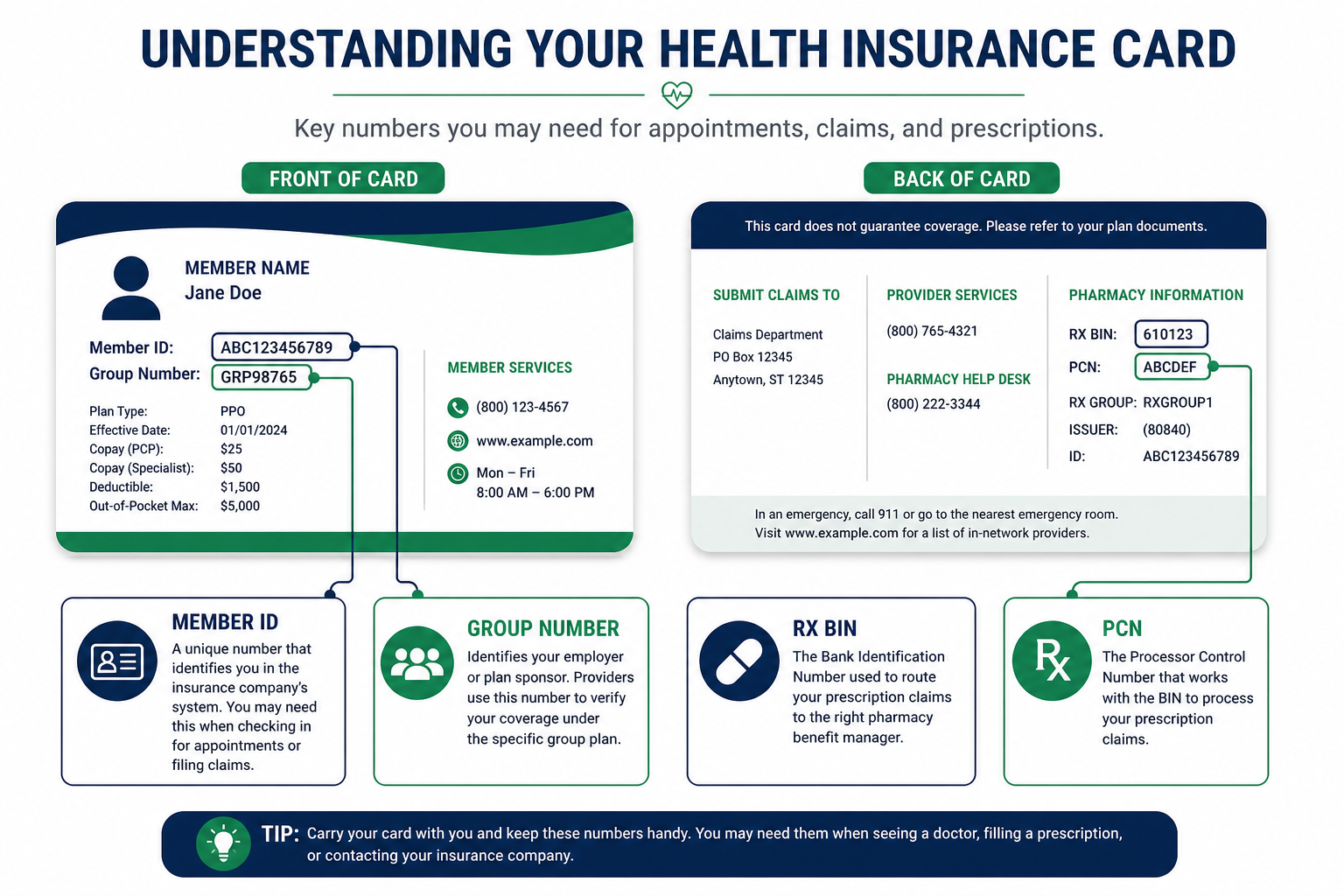
How Health Insurance Deductibles Normally Work
Key Takeaway: A deductible is the amount you pay out-of-pocket before your plan starts sharing costs. On a $2,000 deductible plan, you pay the first $2,000 of covered services, then coinsurance kicks in until you hit your out-of-pocket maximum.
Most Americans understand deductibles from auto or homeowners insurance: you pay the first chunk, then insurance covers the rest. Health insurance works similarly, but with more layers, copays, coinsurance, separate pharmacy deductibles, and in-network vs. out-of-network tracks.
A typical high-deductible health plan (HDHP) in 2026 has a deductible of $1,600–$3,200 for individual coverage. You pay 100% of negotiated rates until that threshold, then 10–30% coinsurance until your out-of-pocket maximum (often $5,000–$9,100 for ACA plans).
No-deductible plans skip that first phase. Instead of paying $2,000 before coverage starts, you pay a flat copay ($25 for primary care, $50 for specialists) or a coinsurance percentage from visit one.
What No Deductible Does, and Does Not, Cover
Key Takeaway: No deductible does not mean free healthcare. You still pay copays, coinsurance, prescription costs, and anything above your out-of-pocket maximum. Non-covered services, out-of-network care, and cosmetic procedures are excluded regardless of deductible status.
Here is what a typical no-deductible PPO plan might look like:
| Service | Your Cost (No Deductible) | Notes |
|---|---|---|
| Primary care visit | $20 copay | From first visit |
| Specialist visit | $40 copay | Referral may be required |
| Preventive care (ACA) | $0 | Annual physical, screenings |
| MRI / CT scan | 20% coinsurance | Prior auth often required |
| Hospital stay | $250/day copay or 20% coinsurance | Counts toward OOP max |
Under the ACA, all plans cap annual out-of-pocket spending at $9,100 for individual coverage (2026). Once you hit that maximum, the plan pays 100% of covered in-network services for the rest of the plan year, regardless of whether you had a deductible.
No Deductible vs. High-Deductible Plans: Which Costs Less?
Key Takeaway: No-deductible plans benefit frequent healthcare users. Healthy individuals who visit a doctor once a year often save more with a high-deductible plan plus HSA tax advantages. Compare total annual cost: premium + expected copays + worst-case out-of-pocket maximum.
Consider two hypothetical plans for a single 35-year-old:
- Plan A (no deductible): $450/month premium, $25 PCP copay, $40 specialist copay, $6,000 out-of-pocket max
- Plan B (HDHP): $280/month premium, $2,000 deductible, 20% coinsurance, $7,000 OOP max, HSA-eligible
If you see a doctor twice a year and take no prescriptions, Plan B costs $3,360/year in premiums vs. $5,400 for Plan A, a $2,040 savings. But if you need an MRI, surgery, and ongoing specialist care, Plan A's predictable copays may cost less overall despite the higher premium.
Partial Deductible Waivers: The Fine Print Most People Miss
Key Takeaway: Many plans marketed as “no deductible” actually waive the deductible only for specific service categories. Hospital stays, imaging, and brand-name drugs may still require meeting a deductible first.
This is called a deductible-with-exceptions structure. Your SBC might show:
- $0 deductible for primary care, urgent care, and generic drugs
- $1,500 deductible for specialist visits, imaging, and hospital stays
- Separate $500 pharmacy deductible for brand-name and specialty drugs
When you receive an EOB showing deductible charges on a “no deductible” plan, compare the service category against your SBC. If the charge violates your plan's stated benefits, file an appeal citing the specific benefit language.
Weak vs. Strong Language When Disputing Incorrect Deductible Charges
Key Takeaway: Billing errors on no-deductible plans are common, especially when providers apply the wrong benefit tier. Dispute with your plan's SBC language, not frustration.
| ❌ Weak Statement | ✅ Strong Statement |
|---|---|
| “My plan has no deductible. Why am I being charged $400?” | “Per SBC page 2, primary care visits require a $25 copay with no deductible. Claim #456789 applied $400 toward deductible on 7/1/2026. Request reprocessing at $25 copay per plan benefits.” |
| “I was told this would be covered.” | “Member services confirmed $40 specialist copay on call ref #MS-78901 (7/5/2026). EOB shows $320 applied to deductible. Attached: call log, SBC benefit summary, and itemized provider bill.” |
| “Please fix my bill.” | “I appeal denial code PR-1 (deductible applied in error). Plan ID ABC123 has $0 medical deductible per 2026 enrollment confirmation. Request corrected EOB and provider reprocessing.” |
Charged a Deductible on a No-Deductible Plan?
AppealFlow's free generator drafts a dispute letter citing your plan's benefit language and ERISA appeal rights, ready in under 60 seconds.
How to Read Your EOB When You Have No Deductible
Key Takeaway: Your EOB should show copay or coinsurance applied immediately, not deductible amounts. If you see “deductible applied” on a no-deductible plan, compare the service type against your SBC before paying.
Key EOB fields to check on every statement:
- Amount billed: Provider's full charge
- Allowed amount: Negotiated rate your plan recognizes
- Plan paid: What insurance covered
- Your responsibility: Should show copay or coinsurance, not deductible, on a no-deductible plan
- Remark codes: PR-1 means deductible applied; CO-45 means out-of-network
Access your EOB through your insurer's member portal on Availity, Express Scripts, or your plan's website. Compare each line item to your SBC benefit table.
Does No Deductible Apply to Out-of-Network Care?
Key Takeaway: Almost never. Plans with no in-network deductible maintain a separate, higher out-of-network deductible, or exclude out-of-network coverage entirely on HMO/EPO plans.
If you see an out-of-network provider on a no-deductible PPO plan, expect a $3,000–$5,000 out-of-network deductible, 50% coinsurance, and potential balance billing. Out-of-network spending does not count toward your in-network out-of-pocket maximum.
Tip: Even on no-deductible plans, verify network status before every appointment. An out-of-network specialist visit can generate a bill 5–10 times higher than the in-network copay you expected.
Five Mistakes People Make With No-Deductible Plans
Key Takeaway: Assuming no deductible means no cost-sharing is the most expensive mistake. Read your SBC, track your out-of-pocket spending, and dispute billing errors promptly.
- Thinking “no deductible” means free care. Copays and coinsurance still apply on every visit.
- Not reading the SBC fine print. Partial deductible waivers are common and confusing.
- Ignoring out-of-network costs. Separate deductibles and higher coinsurance apply.
- Paying EOB charges without verifying. Billing errors on no-deductible plans are fixable through appeal.
- Choosing no-deductible when HDHP + HSA is cheaper. Run the numbers for your actual healthcare usage.
Frequently Asked Questions
Answers to the most common questions about what no deductible means on health insurance.
Generate Your Free Billing Dispute Letter
AppealFlow.net drafts dispute letters citing your plan's benefit language and ERISA appeal rights, edit live, then download as PDF or Word. No account required.
- 100% Free
- No Signup
- PDF & Word Export
Disclaimer: This article is for educational purposes only and does not constitute medical or legal advice. AppealFlow.net is not a healthcare provider or law firm. Plan details vary, always consult your Summary of Benefits and Coverage. For medical emergencies, call 911. See our full disclaimer.