Denial Code Guide
CO-151 Denial: Frequency Limitation Appeal
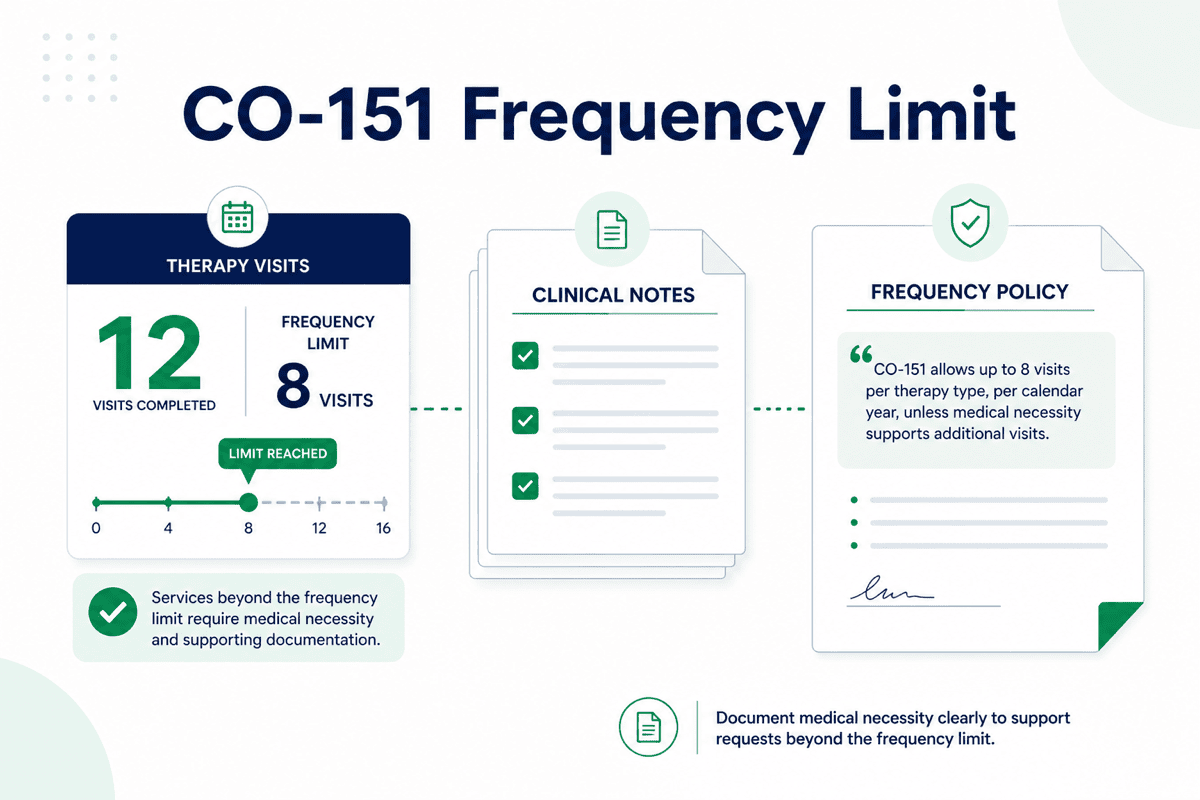
What Does CO-151 Mean on Your EOB?
Key Takeaway: CO-151 is a frequency or unit-count adjustment, not a blanket non-covered denial. The payer is saying your documentation does not justify the number of services billed.
On a remittance advice or Explanation of Benefits, CO-151 (Claim Adjustment Reason Code 151) means payment was adjusted because the payer deems the submitted information does not support this many services or this frequency of services. That often appears for physical therapy, chiropractic visits, home health episodes, lab panels billed too often, or durable medical equipment replacements billed before the plan's interval.
Compare the denied line to your plan's benefit summary and any medical policy attached to the denial. Frequency limits are plan-specific. A Medicare Advantage plan, Medicaid managed care plan, and employer ERISA plan can each set different visit caps for the same CPT code.
CO-151 can appear on some lines while other visits on the same claim pay normally. Review each line separately because partial payment may mean only certain dates failed documentation review.
Corrected Claim or Internal Appeal?
Key Takeaway: Fix the claim when the unit count or date range is wrong. Appeal when the visits happened as billed and your records support each one.
Ask your provider's billing office whether the claim duplicated visits, crossed a plan year, or billed more units than were rendered. A corrected claim with the right unit count can resolve a true billing error without an appeal.
If every visit or unit occurred and is clinically necessary, you need an internal appeal, not just a resubmission. Attach progress notes for each date of service, the treatment plan, functional goals, and any prior authorization or extension approvals. Quote the plan's own frequency language and explain why an exception is required if you exceeded the cap.
When therapy caps reset at plan year boundaries, confirm whether denied visits belong to the prior year authorization or the current one. Misaligned authorization dates are a common CO-151 trigger on physical therapy claims.
What Documents Should You Attach?
Key Takeaway: Reviewers need a dated record for each service and a clear link between your condition and the number of visits billed.
Gather the denial letter, EOB with CO-151, itemized claim, plan SPD or medical policy showing frequency limits, prior authorization letters, and signed clinical notes for every date of service in dispute. For therapy denials, include objective measures such as range of motion, pain scores, or gait changes that show ongoing need.
If your plan required precertification for additional visits, include the approval reference number and dates. Missing that paperwork is a common reason CO-151 stands even when care was appropriate.
How Long Do You Have to Appeal?
Key Takeaway: The filing deadline is on your adverse benefit determination or EOB, not in a single national rule for every plan type.
ERISA group health plans must give you at least 180 days from notice of an adverse benefit determination to file a first-level internal appeal under federal claims procedure rules. ACA marketplace and many fully insured plans print their own windows on the notice. Medicare Advantage and Part B use separate redetermination clocks on Medicare.gov.
File before the printed deadline even if you are still waiting on records from your provider. You can often supplement the file after the initial filing if your plan allows it.
Documents to Gather
Key Takeaway: Attach copies of every item on this list to your appeal or give them to your provider's billing office for a corrected claim.
- EOB or remittance advice showing CO-151
- Denial letter and payer medical policy or frequency rule
- Clinical notes for each date of service in dispute
- Prior authorization or visit-extension approval
- Treatment plan with goals and objective measures
- Itemized claim showing units and dates billed
Corrected Claim or Appeal?
Key Takeaway: Corrected claim when units, dates, or duplicate lines are wrong. Internal appeal when services were rendered as billed and records support medical necessity for each visit or unit.
Weak vs Strong Wording
Key Takeaway: Reviewers respond to claim numbers, dates of service, and attached records, not general complaints about fairness.
| Weak | Stronger |
|---|---|
| My doctor ordered twelve PT visits and insurance should pay for all of them. | Claim line 3 shows twelve PT sessions (CPT 97110) from 3/4/2026 through 4/22/2026. Attached notes document post-op knee stiffness after ACL repair on 2/10/2026. Plan policy allows eight visits per episode; visit-extension PA #88214 approved two additional visits on 4/1/2026. Request payment for sessions 9–12 per attached authorization and daily treatment notes. |
| CO-151 is wrong and I want this claim reprocessed. | CO-151 cites insufficient support for frequency. Enclosed are signed progress notes for each billed date, the active treatment plan dated 3/4/2026, and functional scores showing continued impairment. Request reversal of the frequency adjustment and payment per contracted rate. |
Draft Your Appeal Letter
Use AppealFlow's free generator to structure your appeal with the denial code, dates, and documents you gathered.
Open free appeal letter generatorAuthoritative Sources
Related Pages
Frequently Asked Questions
Common questions about CO-151 — Frequency Limitation denials and appeals.
Need a Starting Point for Your Appeal?
AppealFlow's free generator helps you organize denial details, deadlines, and supporting documents into a letter you can review and file.
Generate free appeal letterEducational information only, not medical or legal advice. Denial code meanings come from standard claim adjustment reason code lists; your plan's notice and contract control appeal rights and deadlines. Full disclaimer