What to Do When Insurance Denies a Claim Twice
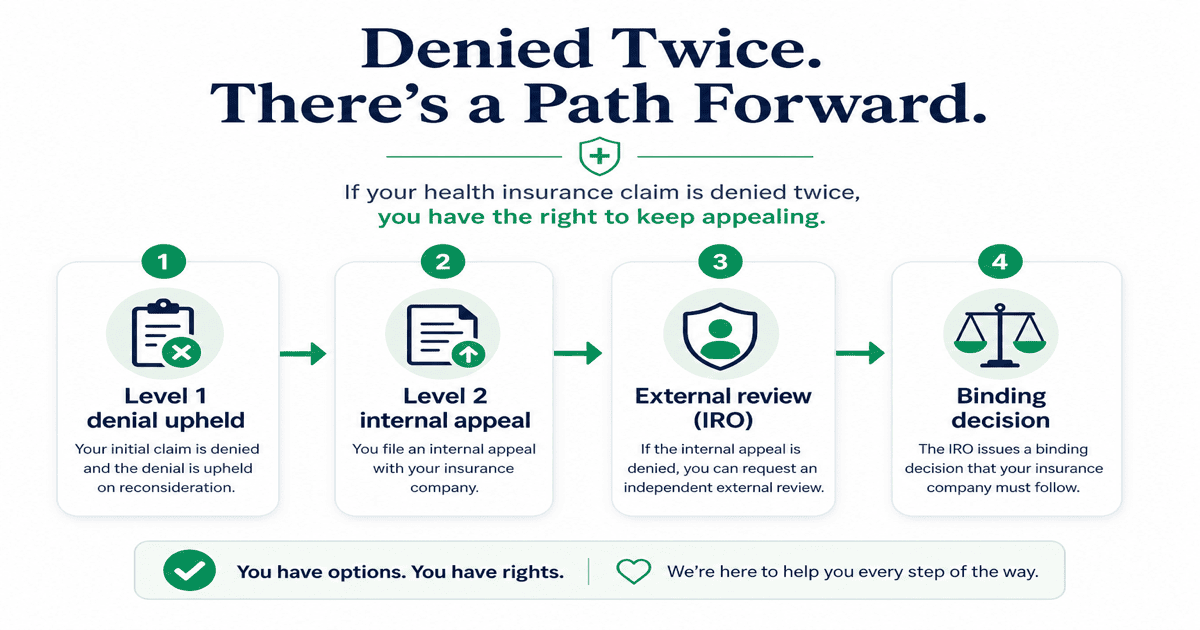
What Does a Second Health Insurance Denial Mean?
Key Takeaway: A second denial is not a repeat of the first phone call. It is usually a written adverse benefit determination after your Level 1 internal appeal was reviewed. The new letter should name the appeal level just completed and the single next step you may take.
The first denial happens when the insurer processes the claim and refuses payment. You file an internal appeal with records and a physician letter. When that review upholds the denial, the plan sends a second notice. That is the moment this guide addresses. If you have not yet filed a first appeal, start with our walkthrough on what to do when a health insurance claim is denied.
Read the second letter for three facts: the appeal level just decided, whether another internal level remains, and the deadline for your next filing. Federal rules under ERISA and Healthcare.gov appeal rules require plans to explain those next steps in plain language on the notice.
How Do You Know Whether to File Level 2 or External Review?
Key Takeaway: The notice controls the path. Level 2 stays inside the insurer with a different reviewer. External review moves the medical judgment question to an Independent Review Organization after internal appeals end.
| What your notice says | Your next step | Who decides |
|---|---|---|
| Level 1 appeal upheld; Level 2 instructions included | File a Level 2 internal appeal with new evidence | A different internal reviewer at the plan |
| Final internal denial; external review form or address listed | Request external review through the named IRO program | Independent Review Organization accredited under 45 CFR 147.136 |
| Medicare Advantage or Part D denial upheld | Follow the next Medicare appeal level on your Medicare Summary Notice or plan letter | Medicare Quality Improvement Organization or Medicare Administrative Contractor per Medicare.gov |
| Self-funded ERISA plan; voluntary external review offered | Confirm in the plan document whether external review is binding or advisory, then file per the notice | Named third-party reviewer or IRO selected by the plan |
For a deeper explanation of the independent step, read what external review in health insurance means. Do not request external review before you exhaust a required internal level. Skipping a listed Level 2 can close your case.
What Should You Do First After a Second Denial?
Key Takeaway: Treat the second denial like a new deadline event. Request the claim file for ERISA plans, compare the upheld rationale to your first appeal, and decide what evidence the first reviewer never saw.
- Circle the appeal deadline on the second notice and set a reminder one week earlier
- Identify the exact reason code and policy section cited in the upheld denial
- For ERISA employer plans, request the complete claim file in writing from the plan administrator
- Ask your treating clinician for an updated letter that answers the insurer's stated rationale
- Confirm whether the case is urgent enough for expedited review on the plan form
Deadline rules differ by plan type. Our guide on how long you have to appeal a health insurance denial walks through ERISA, ACA, and Medicare clocks. Always file using the date printed on your own notice.
How Do You File a Level 2 Internal Appeal?
Key Takeaway: Level 2 is not a copy-paste of Level 1. Name the upheld denial date, respond to each cited reason, and attach records that were missing from the first packet.
Use the appeal form or portal named on your second denial letter. Label the submission clearly as a Level 2 internal appeal or second-level review, matching the plan's terminology. Include your member ID, claim number, and the date of the Level 1 upheld decision.
In the letter body, quote the denial reason code and explain why the clinical record supports coverage under the plan's medical policy. Attach an exhibit list so the reviewer can verify every page. Many members use AppealFlow's free health insurance appeal letter generator to draft a structured Level 2 letter, then edit it with their provider before upload.
When Should You Request External Review?
Key Takeaway: External review follows exhausted internal appeals on qualifying ACA and many state-regulated plans. The IRO decision is binding on the insurer for those plans, not merely advisory.
When your final internal denial names an external review program, file through the address or portal on that letter. Healthcare.gov external review guidance explains that this step uses an independent organization not employed by your insurer. You generally cannot add new arguments that were never raised in internal appeals, but you can submit the full medical record the IRO will read.
For filing mechanics and expedited review, see how to request external review after an insurance denial. Mark urgent cases on the form when delay would seriously jeopardize life or health and ask the plan how to document that standard.
Need a Level 2 or External Review Letter?
AppealFlow drafts regulation-informed appeal letters for upheld denials. Edit live, then download as PDF or Word.
What Documents Do You Need for a Second Appeal?
Key Takeaway: Second appeals turn on what changed since Level 1. Build a packet that shows the reviewer new clinical facts, not the same cover letter with a different date.
- Both denial letters, your Level 1 appeal, and the plan's upheld decision
- Explanation of Benefits and Summary of Benefits and Coverage for the benefit year
- Updated office notes, test results, or operative reports dated after Level 1
- Physician letter mapping your diagnosis and treatment to the cited medical policy section
- ERISA claim file, prior authorization history, and pharmacy records when relevant
Weak vs. Strong Language for a Level 2 Appeal
Key Takeaway: Reviewers at Level 2 look for a direct response to the upheld rationale. Repeating that you disagree without new records rarely changes the outcome.
| Weak statement | Strong statement |
|---|---|
| “I already appealed once. Please approve.” | “Level 1 upheld 8/14/2026 citing policy 3.1 step-therapy requirement. Attached: pharmacy claims showing 90-day trials of metformin and liraglutide with intolerance documented in endocrinology notes dated 8/20/2026.” |
| “My doctor says this is necessary.” | “Denial reason CO-50. Attached physician letter cites ACR appropriateness criteria for knee MRI after six weeks of documented conservative therapy per your medical policy section 7.4.” |
| “I want external review now.” | “Final internal denial dated 9/1/2026 lists external review through [program name]. I submit this request within the 120-day window on the notice with the enclosed record index.” |
What Happens If External Review Upholds the Denial Too?
Key Takeaway: Exhausted appeals are not always the end of every option. Your next step depends on whether your plan is state-regulated, self-funded ERISA, or Medicare.
Fully insured plan members may file a complaint with their state insurance department when they believe the plan violated mandated timelines or notice rules. Self-funded ERISA employer plans are generally overseen by the U.S. Department of Labor rather than state insurance regulators. Medicare beneficiaries continue through the appeal levels described on Medicare.gov.
Some members consult a licensed attorney or qualified patient advocate when the denied service is high cost or clinically urgent. AppealFlow provides educational tools and letter drafts. It does not provide legal representation or guarantee any outcome.
Frequently Asked Questions
Common questions about what to do when insurance denies a claim twice and how Level 2 and external review work.
Generate Your Free Health Insurance Appeal Letter
AppealFlow drafts formal appeal letters for upheld health insurance denials. Edit live, download as PDF or Word, and submit through your plan portal. No account required.
- 100% Free
- No Signup
- PDF & Word Export
Disclaimer: This article is for educational purposes only and does not constitute medical or legal advice. AppealFlow is not an insurance company or law firm. Plan terms, appeal deadlines, and coverage rules vary. Review your denial notice and plan documents, and consult a licensed professional when appropriate. For emergencies, call 911. See our full disclaimer.