How to Bypass Step Therapy for Weight-Loss Medications
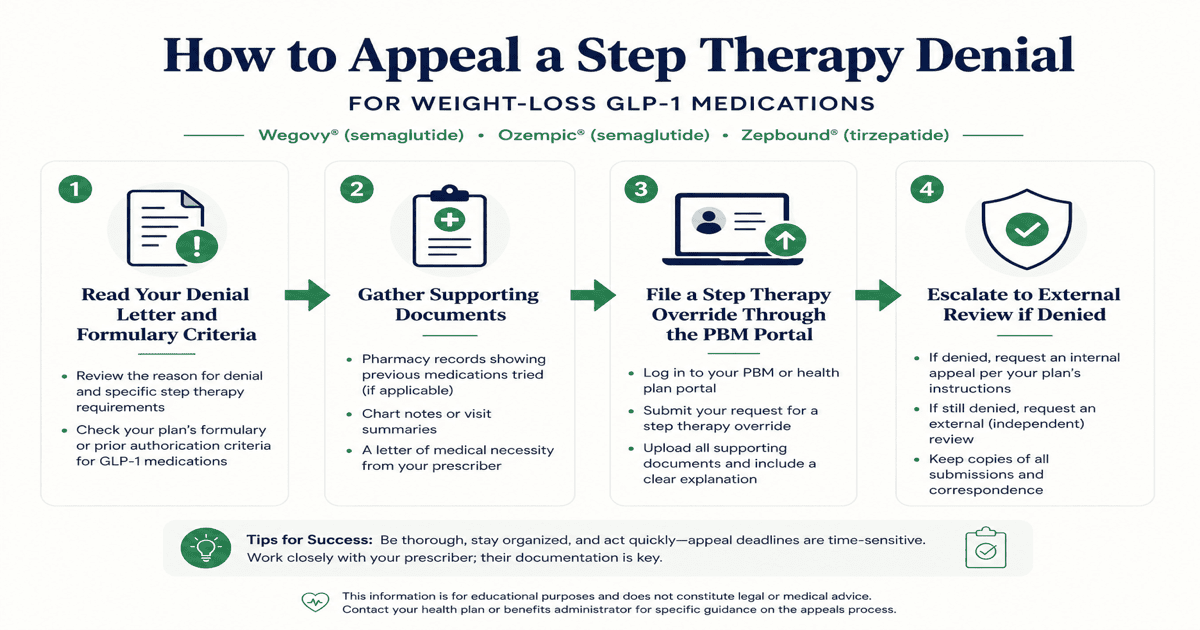
What Is Step Therapy for Wegovy, Ozempic, and Zepbound?
Key Takeaway: Step therapy requires you to try lower-cost options before your plan covers GLP-1 weight-loss drugs. Your denial letter and pharmacy benefit document list the exact sequence and minimum trial durations. That list is your appeal roadmap.
For weight-loss GLP-1 medications, step therapy is one of the most common prior authorization denial reasons. Insurers are not usually debating whether semaglutide or tirzepatide works. They want proof you completed their required sequence before approving a high-cost monthly prescription.
Typical commercial formulary sequences include structured lifestyle modification, older weight-loss medications, and sometimes an older GLP-1 before Wegovy or Zepbound. Sequences vary by PBM and employer plan. Pull your pharmacy benefit document or call member services for the obesity or GLP-1 section, then cross-reference it with the reason code on your denial letter.
Ozempic and Mounjaro are often on diabetes formularies with different step rules than Wegovy and Zepbound on obesity tracks. If you are switching brands, read whether your denial cites a weight-management pathway or a shared GLP-1 class rule. Our guide on how to appeal a Wegovy denial covers brand-specific denial codes and BMI documentation.
When Can You Request a Step Therapy Override?
Key Takeaway: Override grounds usually include prior failure, intolerance, contraindication, or harm from switching stable therapy. You must name the criterion you meet and attach evidence for each required step, not only the drug you want covered.
A step therapy override is a formal appeal, not a resubmission of the same prior auth form. Under DOL ERISA claims procedure rules and ACA marketplace appeal rights, many plans must review new clinical evidence when you invoke appeal rights on your notice.
| Override ground | What to document for GLP-1 step therapy |
|---|---|
| Prior failure of required step | Dates, dose, duration meeting plan minimums, and inadequate weight response or clinical outcome |
| Intolerance or adverse effect | Specific reaction on phentermine, metformin, or older GLP-1 agents with visit notes and stop date |
| Contraindication | Why a required step drug is unsafe with your diagnosis, pregnancy status, or other medications |
| Completed lifestyle step without response | Registered dietitian referral, session dates, and provider-measured weight trend, not home scale alone |
For the general step therapy appeal process across drug classes, see our guide on how to appeal a step therapy denial.
What Documents Prove You Completed or Failed Required Steps?
Key Takeaway: Each required therapy needs name and dose, start and end dates meeting plan minimums, measurable outcome or failure reason, and prescriber attestation. Missing any element often leaves the denial in place.
Request the plan clinical policy cited in your denial. Match your records to every bullet in that policy before you file.
- Pharmacy medication history showing fill dates and quantities for each step drug
- Visit notes documenting side effects, weight change, and reason for discontinuation
- Registered dietitian or structured program records for lifestyle modification steps
- Prescriber letter of medical necessity addressing the specific denial code on your notice
- BMI records and comorbidity labs when your plan ties coverage to obesity criteria
Use the step therapy appeal letter generator to draft a starting letter from your facts, then edit every line with your prescriber before sending.
How Do You File a Step Therapy Override Through Your PBM?
Key Takeaway: Submit through the same PBM portal where the original prior auth was denied and confirm receipt before your appeal deadline. Fax-only submissions without portal confirmation are a common reason appeals never enter review.
| Platform | Common plans | Override filing path |
|---|---|---|
| CoverMyMeds | Multiple PBMs; prescriber-initiated PA | Provider files appeal via key code with step therapy documentation attached |
| Express Scripts | Cigna, some BCBS plans | Member or provider portal under pharmacy appeals or step therapy exception |
| OptumRx | UnitedHealthcare, many employer plans | Prior authorization section with override or appeal request option |
| Caremark | Aetna, CVS Health plans | Coverage and claims area to appeal a pharmacy decision |
Calendar the appeal deadline the day you receive the denial. ERISA employer plans often allow up to 180 days from notice for internal appeals, while ACA marketplace plans commonly use shorter windows printed on the letter. For Ozempic-specific prior auth denials on diabetes formularies, see our guide on Ozempic prior authorization denials.
How Do BMI and Comorbidities Affect GLP-1 Step Therapy?
Key Takeaway: Comorbidities like hypertension, prediabetes, and obstructive sleep apnea may lower BMI thresholds on some formularies but rarely eliminate step therapy. Document both comorbidities and completed steps in the same appeal packet.
Wegovy is FDA-approved for chronic weight management in adults with BMI at or above 30, or at or above 27 with a weight-related comorbidity. Plans may still require step therapy even when you meet BMI criteria. Include ICD-10 codes and supporting labs such as HbA1c, blood pressure readings, or sleep study results when your formulary ties coverage to comorbidities.
A frequent mistake is proving clinical indication without step records. The plan may accept that you qualify for obesity treatment but deny because required steps were not documented. Your override must satisfy both gates when the denial cites them.
Weak vs. Strong Step Therapy Override Language
Key Takeaway: Reviewers approve overrides when the record shows dated metrics and contraindication evidence. Replace vague claims that you tried everything with prescription dates, doses, outcomes, and ICD-10 codes.
| Weak statement | Strong statement |
|---|---|
| “I tried diet and exercise for years and nothing worked. Please approve Wegovy.” | “Patient completed six months of registered dietitian-supervised counseling (referral dated [date], 12 documented sessions) with [X]% body weight loss. Meets plan lifestyle step with inadequate response per formulary Section [X].” |
| “Metformin made me sick so I stopped taking it.” | “Metformin 1000 mg BID trial from [date] to [date] discontinued after [X] days due to documented GI intolerance in visit note dated [date]. Prescriber attests contraindication to continued metformin per plan step therapy exception criteria.” |
| “My doctor wants me to skip step therapy and start Zepbound now.” | “I request a step therapy override for prior failure and intolerance. Attached: phentermine trial with inadequate response, prior GLP-1 trial with documented nausea, and prescriber letter supporting escalation to tirzepatide for chronic weight management.” |
Draft your step therapy override letter
AppealFlow builds a formal letter from your exception ground, prior trial history, and clinical facts. Edit live, then download as PDF or Word.
What If Your Step Therapy Override Is Denied?
Key Takeaway: A final internal denial is not always the end of review. Many plans must offer external independent review for clinical pharmacy decisions when your plan type qualifies. Read the final notice for the filing address and deadline.
When the denial is a formulary exclusion of GLP-1 weight-loss drugs rather than step therapy alone, compare a formulary exception path or plan change at renewal. Employer self-funded plans follow ERISA procedure rules named on the notice.
Check the denial type. Paying cash for one month of Wegovy to prove response rarely satisfies step therapy on its own. Most plans require documented failure of required steps before approving the target drug.
For response timeframes after you file, see our guide on how long health insurance appeals take. Expedited pharmacy appeals may be due within 72 hours when your prescriber certifies serious health risk from delay, per criteria on your notice.
Frequently Asked Questions
Common questions about step therapy overrides for Wegovy, Ozempic, Zepbound, and other GLP-1 weight-loss medications.
Build your step therapy override letter
AppealFlow drafts formal step therapy exception letters from your denial reason and clinical documentation. Edit live, download as PDF or Word. No account required.
- 100% Free
- No Signup
- PDF & Word Export
Disclaimer: This article is for educational purposes only and does not constitute medical or legal advice. Step therapy criteria and appeal deadlines vary by plan type and PBM. Medicare Part D generally excludes weight-loss drugs from standard coverage. Always review appeal letters with your prescriber before submission. See our full disclaimer.