What Is a Peer-to-Peer Review in Health Insurance?
What Is a Peer-to-Peer Review?
Key Takeaway: The call is a utilization-management conversation about clinical criteria. Your treating clinician speaks with a plan reviewer who already has the denial reason. The goal is to see whether chart facts change the prior-authorization or medical-necessity outcome before you move to a written appeal.
After a prior authorization or medical-necessity denial, many commercial plans offer a short window for the ordering clinician to discuss the case with the plan's medical director or a contracted reviewer. CMS describes prior authorization as a utilization-management process in its Interoperability and Prior Authorization final rule. A peer-to-peer review sits inside that process. It is not listed on Healthcare.gov's internal-appeals page as a separate federal appeal form.
The reviewer already knows which policy line or criteria the denial cited. The treating clinician brings the chart: diagnosis, failed alternatives, imaging or lab findings, and why the requested drug, test, or procedure fits that criteria. If the plan overturns the denial on the call, you may get a new authorization number. If not, you still need the written internal appeal on the notice.
How Does a Peer-to-Peer Review Differ From a Written Appeal?
Key Takeaway: The call is clinician-to-clinician and often verbal. The appeal is the written process on the denial notice with its own deadline. Run both tracks in the same week when the plan offers a slot, but do not treat the call as a substitute for filing.
| Feature | Peer-to-peer review | Written internal appeal |
|---|---|---|
| Who participates | Treating clinician and plan medical reviewer | You, your clinician, or an authorized representative |
| Format | Scheduled phone or video call, often within a few business days | Forms, portal upload, or letter with claim or auth number |
| Federal basis | Plan utilization-management rule, not a federal appeal form | Internal appeal right described on Healthcare.gov and in ERISA claims publications |
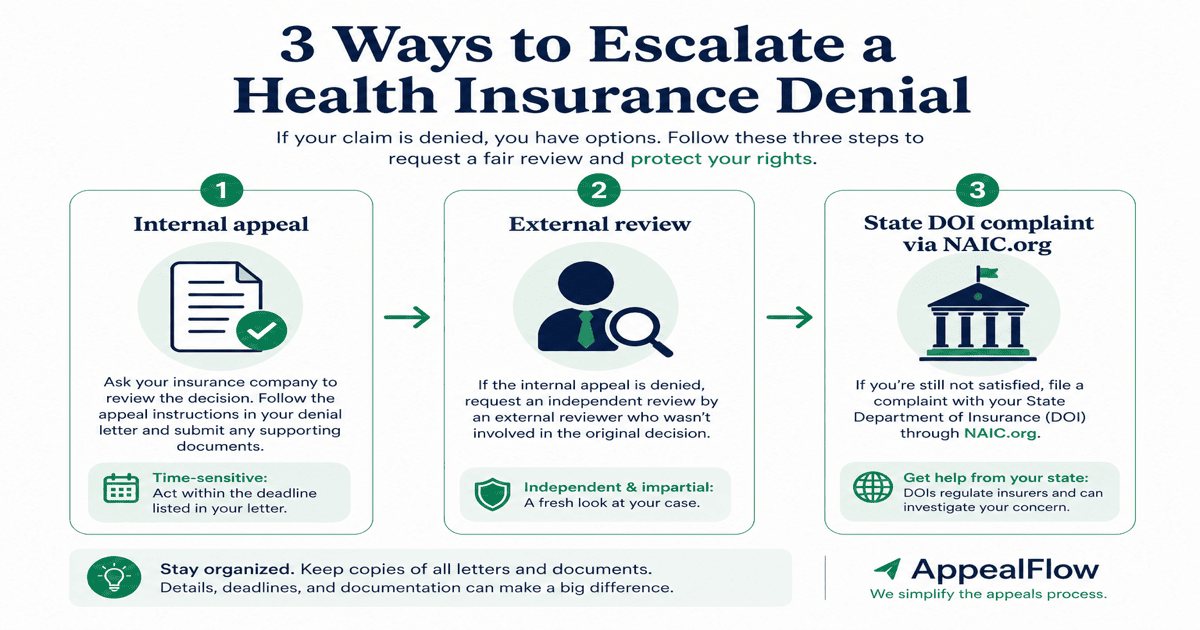
| If it fails | File the written appeal by the notice deadline | Request external review if the plan upholds the denial and your plan type qualifies |
How Do I Request a Peer-to-Peer Review?
Key Takeaway: The denial letter and utilization-management phone number control the request window. The treating clinician's office usually must call. There is no single federal form or nationwide deadline for scheduling the call.
Start with the prior-authorization or medical-necessity denial. Look for a utilization-management phone number, fax line, or portal link. Plans usually offer the call after a pre-service denial for a drug, imaging study, surgery, or durable medical equipment. Some vendors schedule it only when the treating clinician asks. Others print a callback number and a date after which the offer expires.
- Ask your clinician's office to call the number on the denial the same week you receive it. Give them the member ID, authorization or claim number, and the exact service or drug code denied.
- Confirm who may request the call, how many business days you have to schedule it, and whether the decision will be verbal, written, or both.
- Write down the representative's name, the callback number, and the case number. Healthcare.gov tells you to keep notes from phone conversations that relate to your appeal, including who you spoke with and what was said.
- Calendar the written-appeal deadline from the same notice. If the peer-to-peer slot is not scheduled before that date, file the written appeal with the same clinical records.
For the filing date on commercial and Marketplace notices, see how long you have to appeal a health insurance denial. If waiting for the standard clock would seriously jeopardize health or function, see how to request an expedited insurance appeal.
How Do I Prepare for the Call With the Insurer's Medical Director?
Key Takeaway: The treating clinician leads the call. You can help by sending the denial, the policy line cited, and a one-page fact sheet before the slot. A patient-only call with customer service is not a peer-to-peer review.
Ask the office for a one-page sheet the clinician can read from: diagnosis and ICD-10 codes, the CPT or J-code requested, the exact criteria line the denial quoted, what was already tried, and the guideline or labeling the office is using. If the plan cited a medical policy number, have that policy open during the call. If the denial said chart notes were missing, fax or upload them before the call so the reviewer is not hearing about them for the first time.
Document checklist for the clinician
- Denial letter and the clinical criteria or policy the plan named
- Clinic notes, imaging or lab reports, and a list of failed or contraindicated alternatives
- Prior authorization history, including any step-therapy or formulary steps already completed
- The written-appeal deadline circled on a calendar because the call does not move that date
During the call, the clinician should name the diagnosis, tie each fact to the plan's criteria, and ask what additional records would change the decision. After the call, get the day, time, reviewer name, and title from the office. Those notes belong in the written packet if the denial stands. For a full prior-auth appeal packet after the call, see how to appeal a prior authorization denial.
Need a Written Appeal After the Call?
AppealFlow drafts a prior-authorization appeal letter from the denial reason and facts you enter. The peer-to-peer call stays between clinicians. You still file on the portal or address on the notice.
Weak vs. Strong Language After a Peer-to-Peer Denial
Key Takeaway: Name the call date, the reviewer, the criteria discussed, and the written appeal you are filing. A complaint that the reviewer did not listen does not give the next examiner a record to review.
| ❌ Weak Request | ✓ Strong Request |
|---|---|
| “We already did peer-to-peer. Just approve this now.” | “Peer-to-peer on [date] with [reviewer name/title], claim or auth #[number]. The reviewer cited [policy/criteria]. Attached are [notes, failed alternatives, guideline]. I file this internal appeal under the process on the [date] denial notice.” |
| “The doctor said the call would fix it, so I did not send a letter.” | “The call did not overturn the denial. This writing is the internal appeal required by the notice. Please issue a written determination and external-review instructions if you uphold.” |
| “I have a right to a peer-to-peer under federal law before you can deny me.” | “Federal appeal rights on Healthcare.gov are internal appeal and, if needed, external review. The plan offered a clinician call as utilization management. I completed that call on [date] and now file the written appeal.” |
What If the Peer-to-Peer Review Does Not Overturn the Denial?
Key Takeaway: A declined, missed, or unsuccessful call is not a final external-review decision. File the internal appeal on the notice, then external review if the plan upholds the denial and your plan type qualifies.
Healthcare.gov's internal-appeals page lists the kinds of denials you can appeal, including services the plan calls not medically necessary. If the insurer still denies the claim after the internal appeal, you can file for external review. The Department of Labor's claims-and-appeals publication describes the written ERISA appeal: at least 180 days to file on many employer plans, a new reviewer, and a decision clock that depends on urgent, pre-service, or post-service status. None of those pages treat a peer-to-peer call as exhaustion of those rights.
Do not invent a federal peer-to-peer form. If the office cannot get a slot, file the internal appeal with the same clinical records. There is no official national success rate for these calls. Do not rely on unsourced percentages when you decide whether to write.
What If I Have Medicare Instead?
Key Takeaway: Medicare Advantage and Part D plans may still use clinician-to-clinician discussions, but the appeal you file is the Medicare process on the notice. Original Medicare claim denials on a Medicare Summary Notice are redeterminations, not a commercial peer-to-peer letter.
Medicare.gov's claims and appeals hub states that you can file an appeal if you disagree with a coverage or payment decision by Original Medicare, a Medicare health plan, or a Medicare drug plan. Follow that notice. Do not paste ERISA peer-to-peer language onto a Medicare Summary Notice or a Part D coverage determination.
Frequently Asked Questions
What a peer-to-peer review is, how to request the call, how to prepare for the insurer's medical director, and why it does not replace a written internal appeal.
Draft a Prior Authorization Appeal Letter
AppealFlow.net drafts a letter from the denial reason and facts you enter. Use it for the written internal appeal if the peer-to-peer call does not change the decision. Edit live, download as PDF or Word.
- 100% Free
- No Signup
- PDF & Word Export
Disclaimer: This article is for educational purposes only and does not constitute medical, legal, or financial advice. AppealFlow.net is not a healthcare provider, insurance broker, or law firm. Peer-to-peer windows and appeal clocks differ by plan and program. Verify the denial notice, Healthcare.gov, the Department of Labor, or Medicare.gov before you file. For medical emergencies, call 911. See our full disclaimer.