What Is Prior Authorization?
What Is Prior Authorization?
Key Takeaway: Prior authorization is an advance coverage review. Healthcare.gov defines it as approval from a health plan that may be required before you get a service or fill a prescription in order for that service or prescription to be covered. Approval of the request is not a promise the final claim will pay.
Plans use prior authorization (PA), also called preauthorization or precertification, to check whether a drug, imaging study, procedure, or durable medical equipment meets the plan's written criteria before they agree to treat it as a covered benefit. The Healthcare.gov preauthorization glossary adds that a plan may require this step before you receive certain services, except in an emergency, and that preauthorization is not a promise the plan will cover the cost.
CMS describes prior authorization as a utilization-management process in its Interoperability and Prior Authorization final rule (CMS-0057-F). That rule sets electronic-exchange and decision-timeframe requirements for certain payers (Medicare Advantage, Medicaid, CHIP, and some Marketplace QHP issuers) for medical items and services. It does not set a single nationwide clock for every ERISA self-funded employer plan, and it does not cover drug-benefit API requirements.
Paying cash is not a workaround. If the plan required PA and you get the service without it, the later claim can still be denied as not authorized. You may owe the billed amount, not just a copay. Ask whether a retroactive or concurrent authorization path exists before you pay.
Prior Authorization vs. Referral vs. Step Therapy vs. Formulary Exception
Key Takeaway: These rules can stack. A specialist referral does not replace PA for the MRI the specialist orders. Step therapy is a type of PA for drugs. A formulary exception asks the plan to cover a drug or waive a coverage rule that is not already approved on the list.
| Rule | What it is | Typical question it answers |
|---|---|---|
| Prior authorization | Plan (or PBM / utilization vendor) review against coverage criteria before the service or fill | Does this item meet the plan's medical-necessity or coverage policy? |
| Referral | Network rule: primary care (or the plan) authorizes a specialist visit | May I see this specialist in network? |
| Step therapy | A PA subtype that requires a preferred drug first. Medicare.gov drug-plan rules describe this for Part D | Did you try the plan's required first-line drug? |
| Formulary exception | Request to cover a drug not on the list, or to waive a quantity limit or step rule, with a prescriber supporting statement | Should the plan make an exception to its drug list or coverage rule? |
Where Pharmacy Prior Authorizations Often Live
Key Takeaway: Pharmacy-benefit PA is usually submitted by the prescriber or specialty pharmacy through a PBM workflow. CoverMyMeds, Express Scripts, OptumRx, and CVS Caremark are examples of portals where those requests often sit. That list is not complete, and it is not the path for every hospital MRI.
Ask the clinic which benefit the item is billed under. A self-administered drug at a retail or mail pharmacy is usually pharmacy benefit. An infusion, implant, or imaging study is often medical benefit and goes through the medical insurer's utilization-management vendor (or Availity / payer portals), not the same screen the pharmacist uses.
If the pharmacy says “PA required,” get the BIN/PCN/group on the card, the NDC, and the diagnosis the prescriber will submit. Incomplete diagnosis or missing lab values are common reasons a PA never leaves “pending.” How long the review takes is plan-specific; see how long prior authorizations take for medication.
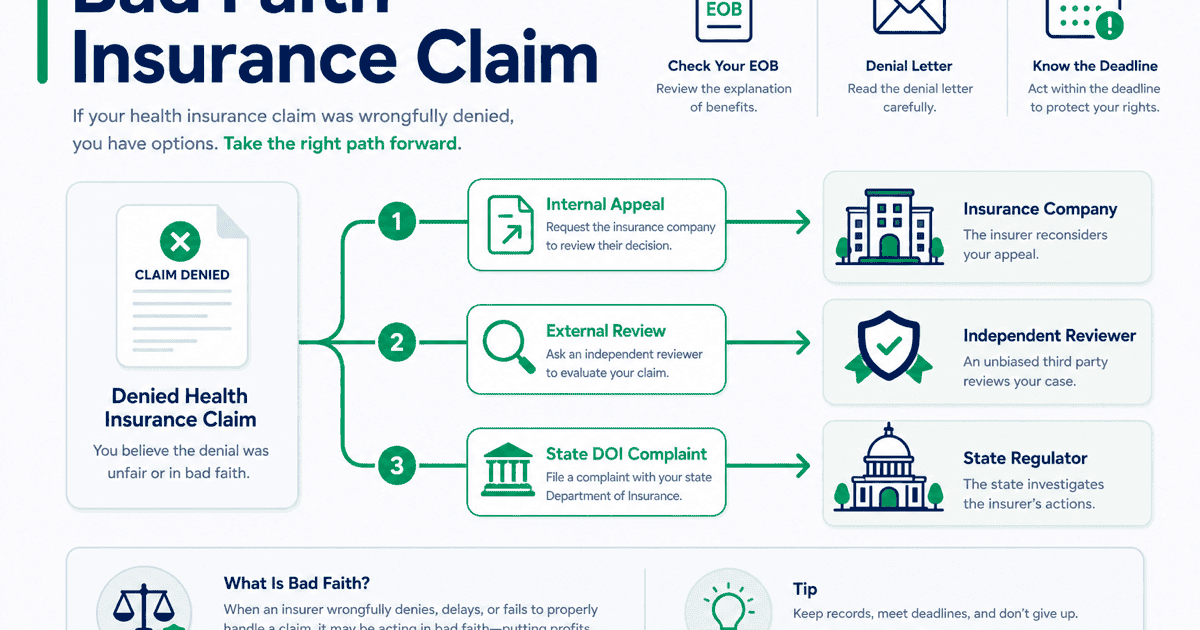
What If the Plan Refuses Authorization?
Key Takeaway: A refused PA is typically an adverse benefit determination. For most employer group health plans, 29 CFR 2560.503-1 sets ERISA claims-procedure rights, including a minimum 180-day period to appeal. ACA marketplace, Medicaid, and Medicare Part D use their own notices and clocks. Do not assume one federal number covers every card.
After a denial you can usually: (1) supply the missing clinical information and resubmit, (2) ask the prescriber to request a peer-to-peer review with the reviewer, (3) request an exception if the issue is formulary, step therapy, or a quantity limit, and (4) file a formal internal appeal. For the appeal packet and what to attach, see how to appeal a prior authorization denial.
- ERISA employer plans: claims procedure in the SPD; appeal of an ABD is often at least 180 days from the notice (29 CFR 2560.503-1). Urgent pre-service claims have a shorter decision clock.
- ACA marketplace / many individual plans: internal appeal plus external review under PHS Act §2719; use the deadline on the notice, not a guessed ERISA date.
- Medicaid: state fair hearing / managed-care appeal. There is no single national Medicaid PA deadline.
- Medicare Part D: coverage determination and exception process; Medicare.gov currently cites 65 days from the date on the initial denial notice to file a Level 1 appeal.
Weak vs. Strong Prior Authorization Language
Key Takeaway: Name the policy criterion, the diagnosis, the failed or contraindicated alternatives, and the document you are attaching. “Please approve this medication” does not tell a reviewer which box to check.
| ❌ Weak Request | ✓ Strong Request |
|---|---|
| “My doctor says I need this scan. Please authorize it.” | “Requesting prior authorization for CPT [code] on [date] for ICD-10 [code]. Attached: specialist note dated [date] documenting [clinical findings] and why the plan's imaging criteria are met. Referral [number] is already on file; this is a separate PA.” |
| “The pharmacy said I need a PA. Can you call them?” | “Pharmacy benefit PA for [drug, strength, NDC] submitted via [portal, e.g. CoverMyMeds] on [date], reference [ID]. Diagnosis [ICD-10]. Please confirm whether this is step therapy, a formulary exception, or standard PA and what clinical attachments remain outstanding.” |
| “I'll just pay cash and submit the receipt later.” | “Before I pay cash, I need a written organization / coverage determination on whether PA is required and whether an unauthorized service will be denied. If already denied, I will file an internal appeal of the adverse benefit determination by the deadline on the notice.” |
Prior Authorization Already Denied?
Use the prior authorization appeal generator to draft a letter that cites the denial reason you enter. You still file through the plan or PBM process on the notice.
How Long Does a Decision Take, and What Should I Track?
Key Takeaway: Clocks differ by plan type and by urgent versus standard review. CMS-0057-F's 72-hour expedited and seven-calendar-day standard medical PA timeframes apply to listed public-program and Marketplace payers for items and services excluding drugs. ERISA urgent claims follow 29 CFR 2560.503-1. Write down the reference number and the deadline on the notice.
Keep a one-page log: date submitted, portal or fax, reference ID, reviewer name if you have one, and the stated decision date. If the plan misses its own claims-procedure deadline, that failure can affect your next appeal rights. The notice and SPD still control. For medication-specific timing, use the related medication PA timeline post linked above rather than a guessed number of business days.
Frequently Asked Questions
Common questions about what prior authorization is, how it differs from referrals and exceptions, and what to do if the plan refuses.
Generate Your Free Appeal Letter
AppealFlow.net drafts formal appeal letters for prior-authorization and other coverage denials. Edit live, download as PDF or Word. No account required. You still submit the letter through your plan's process.
- 100% Free
- No Signup
- PDF & Word Export
Disclaimer: This article is for educational purposes only and does not constitute medical, legal, or financial advice. AppealFlow.net is not a healthcare provider, insurance broker, or law firm. Prior authorization rules, portals, and deadlines vary by plan type. Verify current requirements with your denial letter, Summary Plan Description, or Medicare.gov before taking action. For medical emergencies, call 911. See our full disclaimer.