How to Dispute Health Insurance Claim Denials
What Does It Mean to Dispute a Health Insurance Claim?
Key Takeaway: Disputing a claim means challenging the insurer's decision not to pay all or part of a bill. A phone call to member services does not start that process. You need a written internal appeal submitted before the deadline on your denial notice.
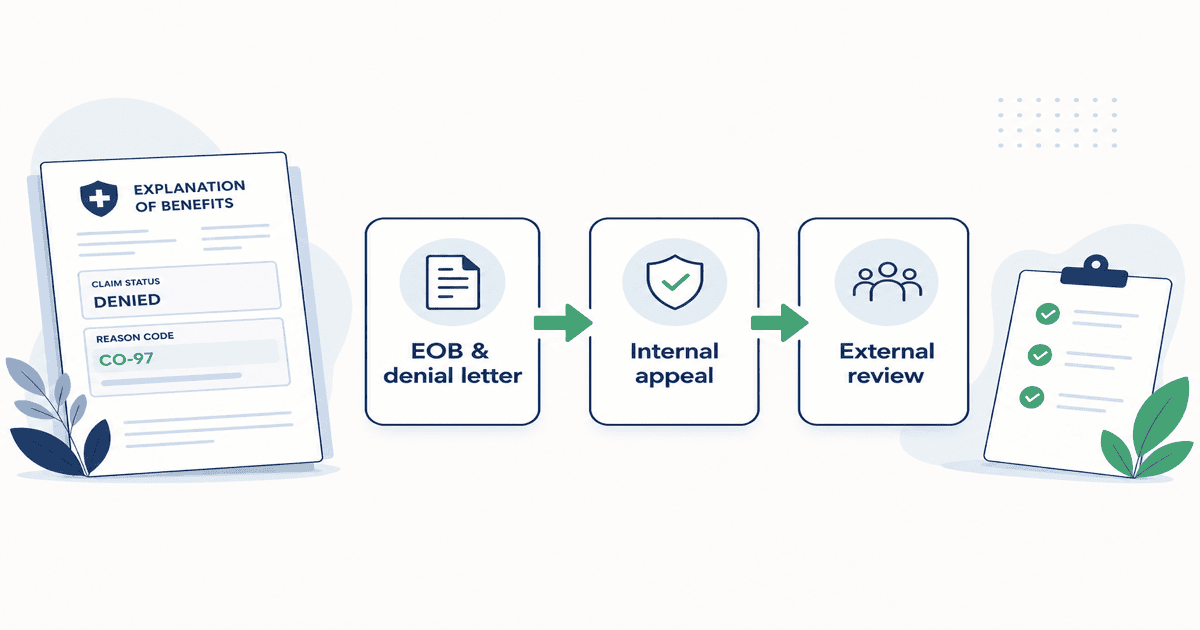
Health insurers issue a denial when they process a claim and refuse payment for a covered reason such as medical necessity, missing prior authorization, or out-of-network status. Your Explanation of Benefits shows what was paid or denied. A separate denial letter may include appeal instructions and the date your window closes.
Federal law gives most people with employer or marketplace coverage the right to a full review of an adverse benefit determination. ERISA-covered employer plans follow claims procedure rules overseen by the U.S. Department of Labor. ACA marketplace plans must provide internal and external review under Healthcare.gov appeal rules. Medicare uses a separate process on Medicare.gov.
How Do You Dispute a Denied Health Insurance Claim Step by Step?
Key Takeaway: Work backward from the reason code on your denial letter. Each step should answer what the insurer said was wrong with the claim, not repeat the same paperwork without new evidence.
- Pull your EOB and denial letter. Match each denied line to its remark or reason code. If you only received a phone call, ask the plan to send the decision in writing with appeal instructions.
- Calendar the appeal deadline. The date on your notice controls. Do not rely on a generic timeline from a friend or an old denial.
- Decide whether you need a corrected claim or a member appeal. Coding errors and missing information often start with your provider resubmitting the claim. Clinical denials need a written appeal with records.
- Request the claim file for ERISA employer plans. Ask the plan administrator in writing for documents used in the denial decision so you can respond to the actual rationale.
- Write your appeal letter. State the claim number, date of service, denial reason, and remedy you want. List every attachment on a cover sheet.
- Submit through the channel on your notice. Member portal, fax, or certified mail all work when the plan accepts them. Save confirmation numbers and delivery receipts.
- Follow up in writing. If you do not receive a decision within the timeframe on your notice, send a dated follow-up that references your submission proof.
- Request external review if the internal appeal fails. Qualifying ACA and state-regulated plans must offer independent review after internal appeals are exhausted.
If this is your first denial, our guide on what to do when an insurance claim is denied walks through EOB reading and first-response decisions in more detail.
Which Denial Reason Points to Which Dispute Strategy?
Key Takeaway: The reason code tells you what evidence to gather. Billing mistakes and clinical denials follow different paths. Sending the same claim again without a formal appeal rarely fixes a coverage dispute.
| Denial type | What it usually means | First dispute action |
|---|---|---|
| Medical necessity | Plan says the service or drug is not required for your diagnosis | Appeal with physician letter, clinical notes, and citations to the plan medical policy |
| Prior authorization | Service was performed without required pre-approval | Request retroactive authorization or appeal with urgency documentation. See how to appeal a prior authorization denial |
| Out-of-network | Provider is not in your plan network | Check emergency and facility-based protections, then appeal with network access records if applicable |
| Coding or missing information | Claim data does not match records or is incomplete | Ask your provider to review and resubmit a corrected claim |
| Step therapy or formulary | Required cheaper drug trials were not documented | Appeal through your pharmacy benefit manager with prescriber records of prior drug trials |
What Is the Deadline to Dispute a Health Insurance Claim?
Key Takeaway: The controlling deadline is on your denial notice. ERISA employer plans, ACA marketplace plans, and Medicare each use different clocks. Missing the internal appeal deadline can end your case before external review is available.
| Plan type | Typical internal appeal pattern | Where to confirm rights |
|---|---|---|
| ERISA employer plan | Many plans allow up to 180 days from the adverse benefit determination for a first appeal, but the date on your notice controls. | Denial letter, Summary Plan Description, and DOL ERISA claims procedure guidance |
| ACA marketplace plan | Internal appeals with timelines disclosed on your denial notice. File through the plan portal or address listed on the letter. | Healthcare.gov internal appeal rules |
| Medicare | Original Medicare, Medicare Advantage, and Part D each use plan-specific notices and forms. | Medicare.gov claims and appeals |
For a deeper walkthrough of appeal windows, read how long you have to appeal a health insurance denial. Submit several days before the printed deadline so portal uploads or mail delivery do not cut your time short.
What Documents Should You Attach to a Claim Dispute?
Key Takeaway: Disputes move when you answer the exact reason code with records a reviewer can verify. Build a packet the insurer can open without calling you for missing pages.
- Denial letter, Explanation of Benefits, and claim number
- Insurance card, member ID, and Summary of Benefits and Coverage
- Medical records, test results, and operative reports when the denial is clinical
- Physician letter or letter of medical necessity tied to the plan medical policy
- Prior authorization history and pharmacy records for step therapy or formulary denials
For clinical denials, see our guide on how to write a medical necessity letter for an insurance appeal. Ask your provider to review the draft before you upload it to the plan portal.
Weak vs. Strong Language When Disputing Claims
Key Takeaway: Reviewers scan for the reason code, dates, and clinical support. Vague frustration without records rarely changes a denial. Specific citations to plan policy and attached evidence do.
| Weak statement | Strong statement |
|---|---|
| “I think my claim should be covered. Please reconsider.” | “I appeal denial code CO-50 on claim #789012 dated 6/15/2026. Attached: physician letter, MRI report, and medical policy section 3.4 criteria showing medical necessity.” |
| “My doctor says I need this treatment.” | “Prescriber attests patient failed required step-therapy agents with dates and outcomes attached. Request formulary exception per plan pharmacy criteria.” |
| “This denial is unfair. I pay my premiums.” | “Member ID ABC123456, denial dated 5/20/2026. I request internal appeal with claim file review and submit operative report and pathology results as exhibits. Appeal deadline per notice: 11/16/2026.” |
Use AppealFlow'sinsurance claim dispute letter generatorto draft a structured appeal letter tied to your denial reason before the deadline on your notice.
Need a Claim Dispute Letter Drafted?
AppealFlow drafts structured appeal letters for health insurance claim denials. Edit live, then download as PDF or Word.
What Is the Difference Between an Appeal and a Grievance?
Key Takeaway: An appeal challenges a specific claim or coverage denial and triggers formal review timelines. A grievance addresses quality of care, customer service, or network adequacy. Use appeals when payment is at stake.
Appeals are your primary tool for overturning denials. They require the insurer to conduct a review with response deadlines set by federal or state rules for qualifying plans. Grievances log complaints that may trigger plan corrections but do not always result in payment.
File an appeal when a claim is denied, prior authorization is rejected, a service is deemed not medically necessary, or you believe balance billing violates federal protections. File a grievance when your provider directory is consistently wrong or customer service fails to resolve an access problem. You can file both, but a grievance alone does not replace a formal claim dispute.
How Do You Request External Review if Internal Dispute Fails?
Key Takeaway: External review puts your records before an independent reviewer after internal appeals are exhausted. Qualifying ACA marketplace and many state-regulated plans must offer it. Medicare and many self-funded ERISA plans follow different paths.
When an internal appeal upholds the denial, qualifying ACA and state-regulated plans must allow external review under Healthcare.gov external review rules. Your denial letter should name the contact or portal for that request. Self-funded ERISA plans are generally overseen by the U.S. Department of Labor, not your state insurance department.
For step-by-step filing instructions, see our guide on how to request external review after an insurance denial. Expedited review may be available when delay would seriously jeopardize your life or health. Ask the plan how to mark an urgent request on your form.
Frequently Asked Questions
Common questions about how to dispute health insurance claim denials and file an appeal.
Generate Your Free Health Insurance Dispute Letter
AppealFlow drafts formal dispute letters for health insurance claim denials. Edit live, download as PDF or Word, and submit through your plan portal. No account required.
- 100% Free
- No Signup
- PDF & Word Export
Disclaimer: This article is for educational purposes only and does not constitute medical or legal advice. AppealFlow is not an insurance company or law firm. Plan terms, appeal deadlines, and coverage rules vary. Review your denial notice and plan documents, and consult a licensed professional when appropriate. For emergencies, call 911. See our full disclaimer.