Can Insurance Deny a Claim?
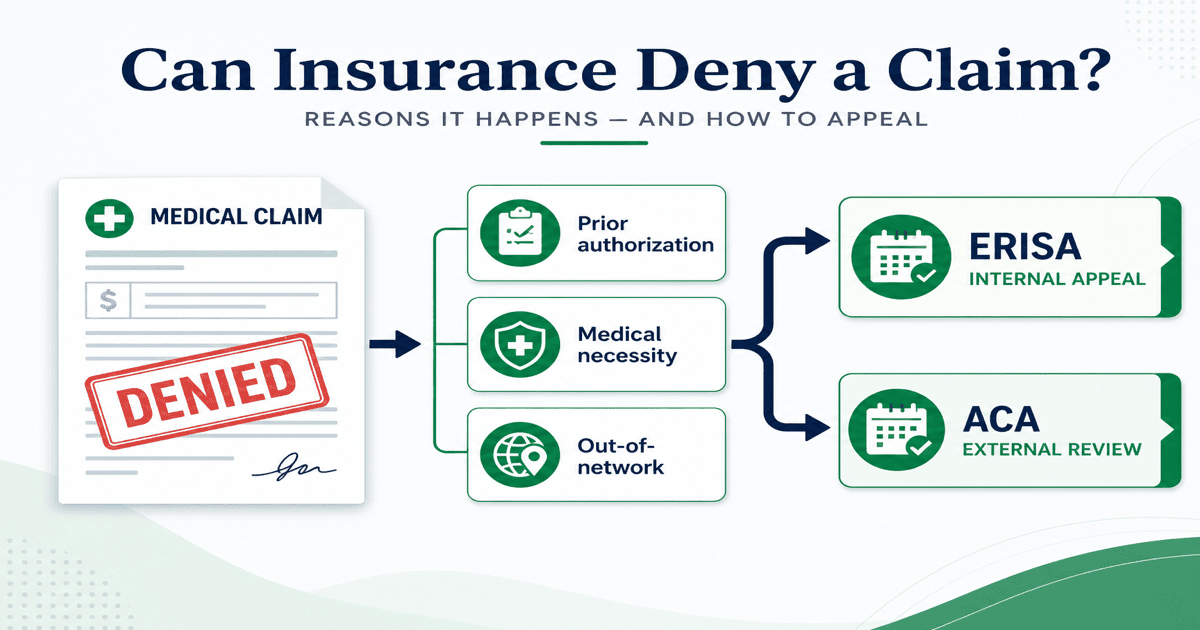
What Does a Health Insurance Claim Denial Mean?
Key Takeaway: A claim denial means the insurer adjudicated a submitted bill and refused to pay all or part of it. Your Explanation of Benefits lists the denied amount, reason or remark code, and appeal instructions. You may still owe the provider until an appeal or corrected claim resolves the balance.
When people ask whether insurance can deny a claim, they are usually staring at a bill from a doctor, hospital, imaging center, or pharmacy that the plan refused to pay. The provider submitted a claim with your member ID, diagnosis codes, and procedure codes. The insurer's system or a medical reviewer compared that submission to your plan rules and returned a denial.
This is different from asking whether a service is covered at all under your benefits package. A claim denial is a transaction decision about a specific bill on a specific date. Your denial letter and Explanation of Benefits should name the reason code, such as medical necessity, prior authorization, or out-of-network status. If you need help reading the line items, see our guide on how to read an Explanation of Benefits.
When Can Insurers Legally Deny a Health Insurance Claim?
Key Takeaway: Insurers deny claims when the submitted service does not meet plan requirements. The most common triggers are missing prior authorization, medical necessity not documented, out-of-network billing, coding errors, step therapy rules, and plan exclusions. Each reason needs a different response.
| Denial reason | What the insurer is saying | Typical next step |
|---|---|---|
| Prior authorization | Required pre-approval was not on file before the service | Appeal with urgency documentation or request retroactive authorization. See how to appeal a prior authorization denial |
| Medical necessity | Clinical records do not meet the plan's coverage criteria | Appeal with physician letter, test results, and citations to the plan medical policy |
| Out-of-network | Provider is not contracted with your plan | Check emergency and facility-based protections under the No Surprises Act, then appeal if network access was inadequate |
| Coding or missing information | Claim data does not match records or is incomplete | Ask your provider to review and resubmit a corrected claim |
| Step therapy or formulary | Required lower-cost drug trials were not documented | Appeal through your pharmacy benefit manager with prescriber records |
| Plan exclusion | Benefit is not included in your coverage tier | Compare the denial to your Summary of Benefits and Coverage and appeal if the service should be covered |
Insurers cannot deny covered benefits arbitrarily. If the service should be paid under your plan document, you can challenge the decision with records and plan language. When a denial is upheld after review, you still have appeal rights under federal law for most employer and marketplace plans.
What Federal Appeal Rights Apply After a Denial?
Key Takeaway: Most Americans with employer or marketplace coverage have a right to a written denial, an internal appeal, and in many cases external review. ERISA governs most job-based plans. ACA Section 2719 governs internal and external review for many individual and small-group plans. Medicare and Medicaid use separate processes.
Under ERISA, employer-sponsored group health plans must follow federal claims procedure rules in 29 CFR 2560.503-1. Your adverse benefit determination must explain the reason, cite plan provisions, and tell you how to appeal. You can request the claim file the plan relied on when it denied coverage.
ACA marketplace and many fully insured individual plans must offer internal appeals and external review under Healthcare.gov appeal rules. Medicare beneficiaries follow the multi-level process on Medicare.gov. Medicaid managed care appeals route through your state agency.
Important: A phone call to member services is not a formal appeal. Submit written documentation through the portal or address on your denial letter to trigger ERISA and ACA review standards.
How Do ERISA and ACA Appeal Rights Differ?
Key Takeaway: ERISA employer plans and ACA marketplace plans both require written denials and internal appeals, but deadlines, external review, and oversight differ. Read the date on your notice instead of assuming one national rule applies to every plan.
| Plan type | Governing law | Appeal pattern |
|---|---|---|
| ERISA employer plan | Federal ERISA claims procedures. Self-funded plans are overseen by the U.S. Department of Labor. | Internal appeal with a full and fair review. Many plans allow up to 180 days from the denial notice for a first-level appeal. External review may be voluntary depending on the plan. See ERISA appeal deadlines. |
| ACA marketplace plan | ACA Section 2719 and applicable state insurance law | Internal appeal first, then external review through an independent review organization for qualifying cases. Timelines are disclosed on your denial notice. |
| Medicare | Medicare statutes and CMS rules | Separate redetermination and Level 1 appeal clocks on your Medicare Summary Notice or plan denial. Do not use commercial ERISA deadlines for a Medicare case. |
For a side-by-side look at internal versus external review, read internal appeal vs external review. Missing the internal appeal deadline on your notice can end your case before external review is available on ACA and many state-regulated plans.
What Documents Should You Gather Before You Appeal?
Key Takeaway: Appeals succeed when you answer the exact reason code with records a reviewer can verify. Build a packet the insurer can open without calling you for missing pages.
- Denial letter, Explanation of Benefits, and claim number
- Insurance card, member ID, and Summary of Benefits and Coverage
- Medical records, test results, and operative reports for clinical denials
- Physician letter or letter of medical necessity tied to the plan medical policy
- Prior authorization history and pharmacy records for step therapy or formulary denials
Circle the appeal deadline from your notice the day it arrives. For typical windows by plan type, see how long you have to appeal a health insurance denial. Submit several days before the printed date so portal uploads or mail delivery do not cut your time short.
Weak vs. Strong Appeal Language
Key Takeaway: Reviewers scan for the reason code, dates, and clinical support. Vague frustration without records rarely changes a denial. Specific citations to plan policy and attached evidence do.
| Weak statement | Strong statement |
|---|---|
| “My MRI was denied but I really need it for my back pain.” | “I appeal denial CO-50 for lumbar MRI on 3/12/2026. Attached: six weeks of conservative therapy notes, physician letter, and imaging appropriateness criteria referenced in your medical policy section 4.2.” |
| “Please approve my prescription. My doctor prescribed it.” | “Formulary exception denied for brand drug after documented failure of required step-therapy agents. Attached: pharmacy claims history and prescriber letter listing contraindications to preferred alternatives.” |
| “I pay premiums every month. You should cover this.” | “Claim #88421, denial dated 7/20/2026. I request the claim file under ERISA claims procedure rules and submit this Level 1 appeal with operative report attached. Appeal deadline per notice: 1/16/2027.” |
Need an Appeal Letter for a Denied Claim?
AppealFlow drafts regulation-informed appeal letters for health insurance denials. Edit live, then download as PDF or Word.
What Should You Do After Insurance Denies a Claim?
Key Takeaway: Read the reason code, confirm the appeal deadline, and file a written internal appeal before that date. Coding errors may be fixed with a corrected claim from your provider. Clinical denials need a member appeal with records that address the insurer's stated rationale.
If you only received a phone call, ask the plan to put the decision in writing with the reason code and appeal instructions. Compare the denied service on your Explanation of Benefits to the denial letter. Mark the appeal deadline immediately and decide whether you need a corrected claim or a formal member appeal.
For a step-by-step workflow after you receive the denial, see what to do when an insurance claim is denied. Use AppealFlow's free health insurance appeal letter generator to draft a structured letter that cites your denial reason, member information, and attached exhibits.
Can Insurance Deny a Claim After Paying It?
Key Takeaway: Insurers can request repayment through recoupment when they later determine a claim was paid in error. You have the right to appeal recoupment and request the records used in that decision. Treat the notice with the same urgency as an initial denial.
Post-payment audits can reverse earlier payments for reasons such as duplicate billing, wrong patient information, or a later medical necessity review. Your recoupment notice should explain the reason and give appeal instructions. File before the deadline on that letter and attach any records that show the original payment was correct.
Frequently Asked Questions
Common questions about whether insurance can deny a claim and what ERISA and ACA appeal rights apply.
Generate Your Free Health Insurance Appeal Letter
AppealFlow drafts formal appeal letters for denied health insurance claims. Edit live, download as PDF or Word, and submit through your plan portal. No account required.
- 100% Free
- No Signup
- PDF & Word Export
Disclaimer: This article is for educational purposes only and does not constitute medical or legal advice. AppealFlow is not an insurance company or law firm. Plan terms, appeal deadlines, and coverage rules vary. Review your denial notice and plan documents, and consult a licensed professional when appropriate. For emergencies, call 911. See our full disclaimer.